
Looking for a Le Creuset Alternative? Why Parini Enameled Cast Iron Wins
Le Creuset has earned its reputation for gorgeous, durable enameled cast iron, but the price tag often stops home cooks in their tracks. A single Dutch oven can cost $400 or more, and outfitting an entire kitchen means a serious investment.
Parini enameled cast iron offers a practical alternative without sacrificing the qualities that make this cookware style so beloved. We use the same base material—heavy-gauge cast iron—and coat it with vitreous enamel that resists chipping and staining. The result is cookware that heats evenly, moves from stovetop to oven without complaint, and costs a fraction of what you'd pay for the iconic French brand. This guide walks through what sets our enameled cast iron apart and why we think it's the smarter choice for most kitchens.

Material Construction: Same Iron Core, Same Heat Retention
Both Le Creuset and Parini start with the same foundational material: cast iron poured into sand molds, cooled, and machined smooth. Cast iron’s defining trait is its density—it absorbs heat slowly and releases it just as slowly, which means once a pot reaches temperature it stays there. That thermal mass is why a cast iron vessel can maintain a steady simmer for hours or brown meat without cold spots.
The enamel layer is where brand differences appear, but the function remains identical. Vitreous enamel is powdered glass fused to the iron at around 1,500°F, creating a non-reactive, non-porous surface. Our Parini Dutch Oven uses the same fusing process, so acidic ingredients like tomatoes or wine won’t leach metallic flavors and the interior wipes clean without scrubbing. The enamel prevents rust, eliminates the need for seasoning, and adds a smooth finish that releases food easily—all traits shared across every enameled cast iron brand, premium or otherwise.
Price Gap: Where the Savings Come From
Why Le Creuset Costs More
Le Creuset’s pricing reflects brand heritage, European manufacturing, and a lifetime warranty backed by replacement guarantees. You’re paying for the name, the collector appeal of signature colors, and the assurance that a piece bought today will look identical to one bought twenty years ago.
Parini's Manufacturing Approach
We source our enameled cast iron from foundries that supply multiple brands, applying the same quality standards without the luxury markup. The iron is just as thick, the enamel just as durable, but we skip the boutique retail packaging and celebrity endorsements. That streamlined model lets us offer a 6-quart Dutch oven for under $100—about a quarter of what Le Creuset charges for the same capacity. For a home cook who wants reliable performance without the collector premium, the math is straightforward.
Performance Head-to-Head: Cooking Results That Match
In side-by-side tests, enameled cast iron from different manufacturers performs nearly identically. Both pots take about the same time to preheat, both hold a steady 325°F for braising, and both develop the same fond on the bottom when searing meat. The weight difference is negligible—our 6-quart model weighs about 14 pounds, Le Creuset’s equivalent weighs 15—and both require two hands to lift when full.
The enamel finish on our cast iron cookware collection resists chipping as long as you avoid metal utensils and thermal shock. Drop a cold pot onto a hot burner or scrape it with a fork, and any enamel—ours or theirs—will crack. Treat it gently, and the surface stays smooth for decades. We’ve seen Parini pots in daily use for five years with no visible wear, which matches the longevity reports from Le Creuset owners who aren’t abusing their cookware. The performance ceiling is set by the material itself, not the badge on the lid.

Aesthetic and Design Choices
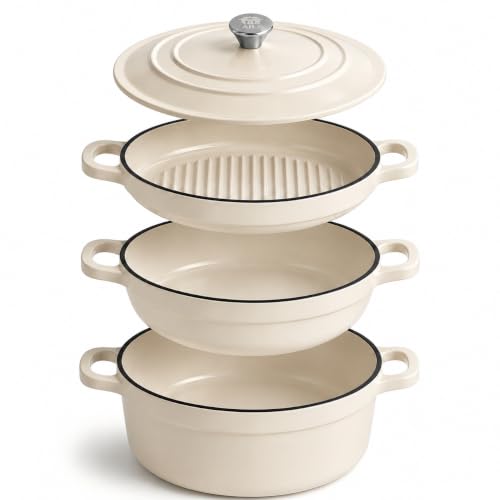
Le Creuset offers dozens of colors, some seasonal and some permanent, which appeals to collectors and people building a coordinated kitchen. Parini keeps the palette simpler—classic red, cream, and black—but the shape and proportions follow the same French oven template. Wide base, tight-fitting lid, loop handles on both sides. If aesthetics are secondary to function, our cast iron cookware range delivers the look of enameled cast iron without requiring you to choose between eighteen shades of blue.
The knob design differs slightly—Le Creuset uses a stainless phenolic knob rated to 500°F, while ours is enamel-coated iron rated to 450°F. For most home cooking that difference is academic; if you’re braising above 450°F you’re likely burning whatever’s inside the pot. Both lids self-baste effectively, and both fit snugly enough to trap steam without rattling.
Longevity and Warranty Considerations
Le Creuset backs its products with a lifetime warranty that covers manufacturing defects and will replace cracked enamel if it fails under normal use. Parini offers a more standard limited warranty—typically one to two years depending on the model—but the real longevity test is how the enamel holds up in daily cooking, not what the paperwork promises.
Enameled cast iron doesn’t wear out the way non-stick coatings do. The enamel either chips from impact or it doesn’t; there’s no gradual degradation. If you avoid dropping the pot, banging it against faucets, or scrubbing with steel wool, both brands will outlast your interest in using them. The warranty difference matters most if you’re rough with cookware or want the peace of mind that comes with a no-questions-asked replacement policy. For careful cooks, the actual product lifespan is functionally identical.
Choosing Enameled Cast Iron That Fits Your Budget
Le Creuset has earned its place in kitchens that value heritage and design continuity, but the performance advantages don’t scale with the price difference. Parini enameled cast iron delivers the same heat retention, the same oven-to-table versatility, and the same decades-long durability at a fraction of the cost.
If you’re outfitting a kitchen from scratch or replacing worn cookware, spending $400 on a single pot means fewer resources for other essentials. Our approach prioritizes function over brand prestige, and the results speak for themselves. You’ll braise, simmer, and bake with the same confidence—you’ll just have more money left for the ingredients that actually end up in the pot.
Common Questions About Enameled Cast Iron Alternatives
Yes, cast iron works on induction because the magnetic iron core interacts directly with the induction field. The enamel coating doesn't interfere with that process, so our pots heat just as efficiently as bare cast iron on induction burners.
Just preheat slowly to avoid thermal shock—start at medium heat and give the pot a few minutes to warm evenly before increasing the temperature.
No, the enamel layer eliminates the need for seasoning. Traditional bare cast iron builds up a polymerized oil coating to prevent rust and create a non-stick surface, but enamel is already non-reactive and non-porous.
You can cook acidic foods without worrying about damaging the finish, and cleanup is as simple as washing with dish soap and a soft sponge.
Most enameled cast iron alternatives—Lodge, Staub, Tramontina, and Parini included—use the same base manufacturing process and source from overlapping foundries. The differences come down to enamel finish quality, color options, and warranty terms rather than fundamental performance gaps.
Parini sits in the middle of the price range among alternatives, offering better enamel consistency than the cheapest imports but without the premium markup of European brands.
Technically yes—the enamel won't corrode—but we don't recommend it. Dishwasher detergents are abrasive and can dull the enamel finish over time, and the high heat can cause thermal stress if the pot cools too quickly.
Hand washing takes about thirty seconds and keeps the enamel looking new for years.
Our enameled cast iron is oven-safe to 450°F with the lid on. The enamel-coated knob on the lid is the limiting factor—the pot itself can handle higher temperatures, but prolonged exposure above 450°F risks cracking the knob.
If you need to braise or bake above that temperature, wrap the knob in aluminum foil or replace it with a metal knob if the model allows.
Light staining can occur with prolonged exposure to highly pigmented foods, but it's usually cosmetic and doesn't affect performance. A paste of baking soda and water will lift most stains if you scrub gently with a non-abrasive sponge.
The cream-colored interior shows staining more visibly than darker finishes, but even heavy staining doesn't compromise the enamel's non-reactive properties.